Case of the Month — Above-Knee Amputation Now Live

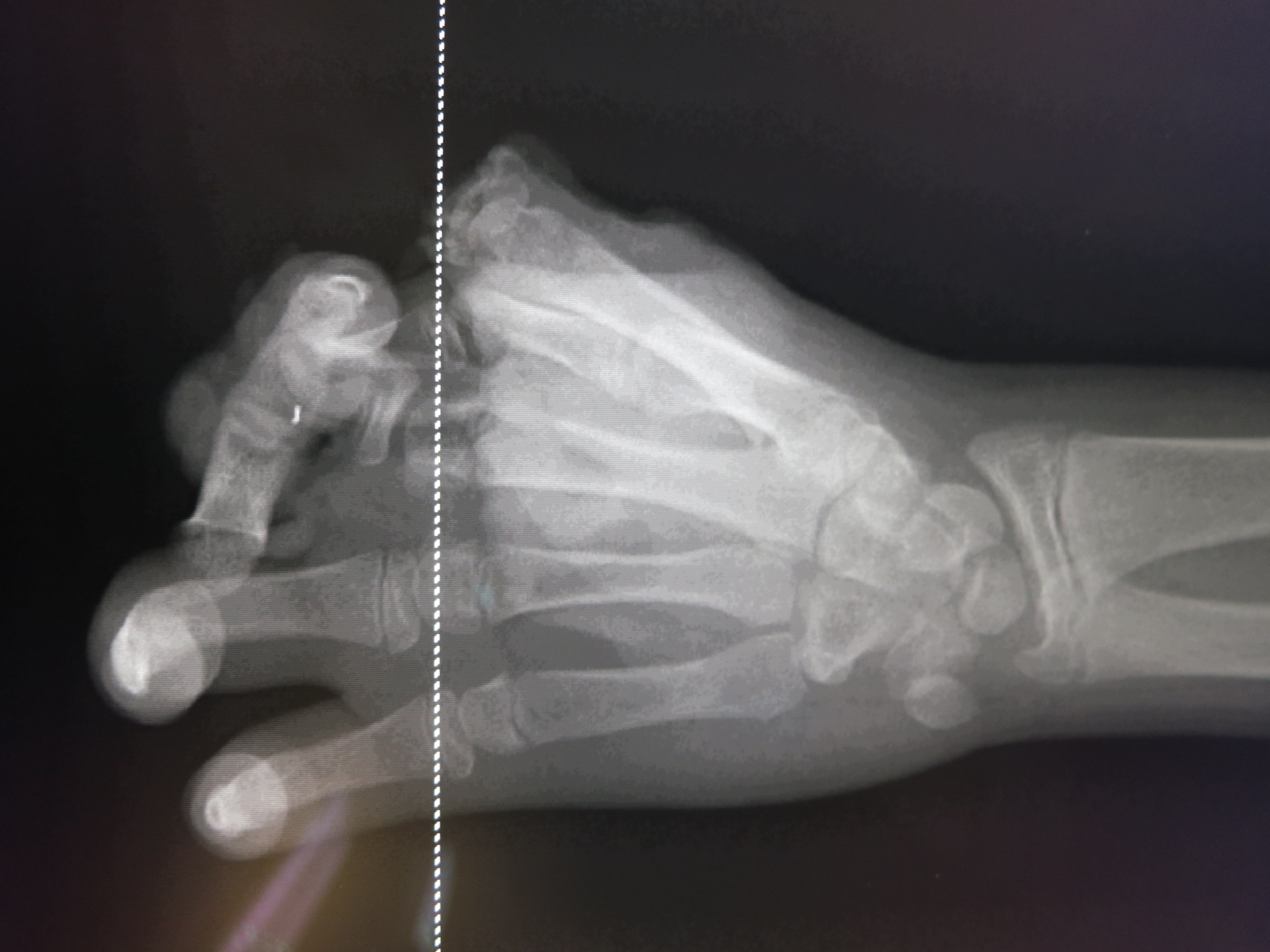
Ara K., a 14-year-old girl, along with her sister and cousin, were riding in a civilian bus when it ran over an improvised explosive device (IED). Although the site had recently been discovered and cleared, a new IED had already been replaced in the same location.

All passengers on Ara K.’s side of the bus were injured or killed. Doctors attempted to revive her cousin at the forward operating base, but both he and Ara K.’s sister died.

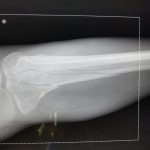
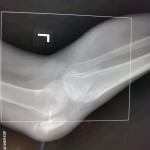
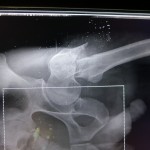
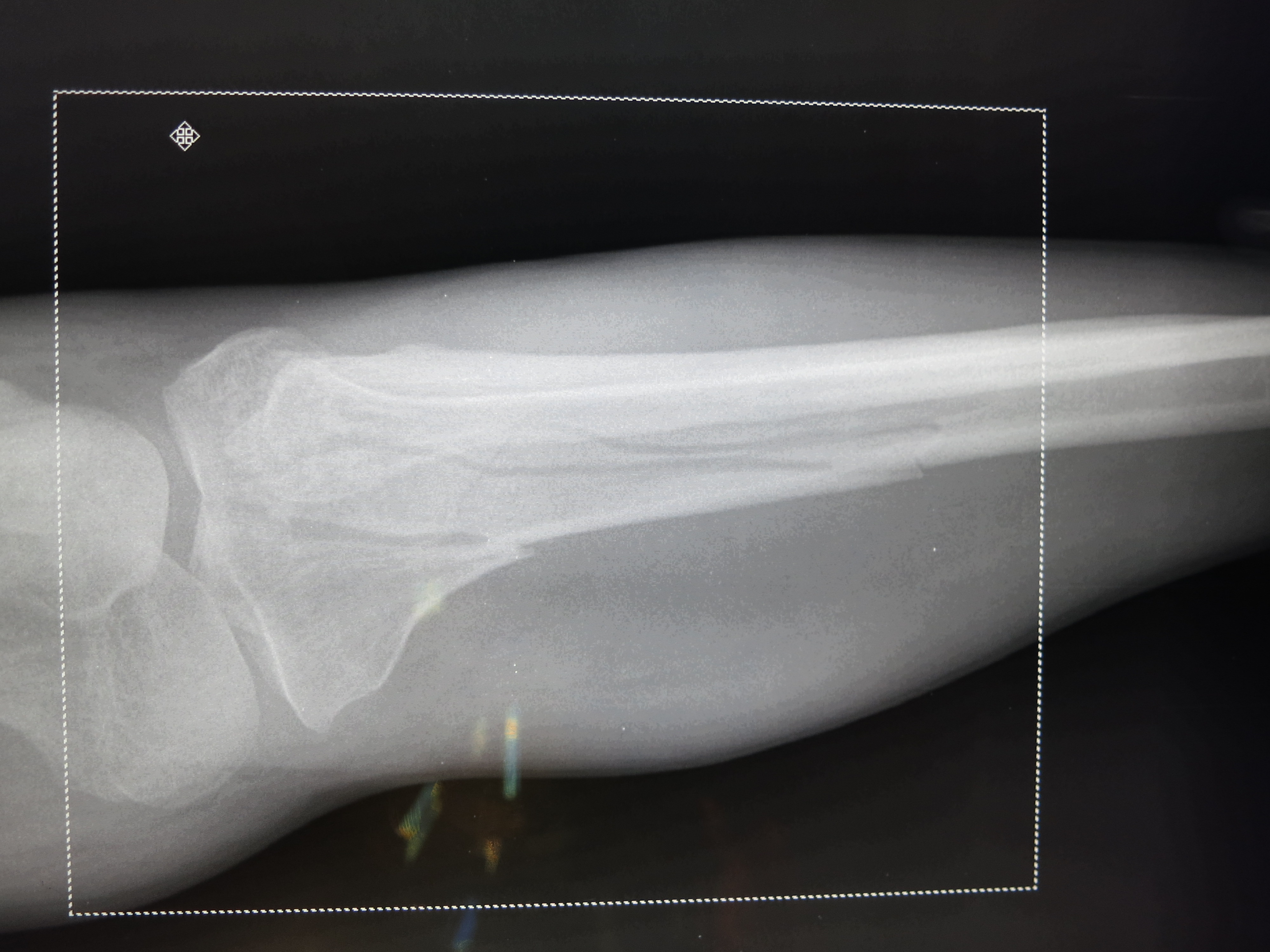
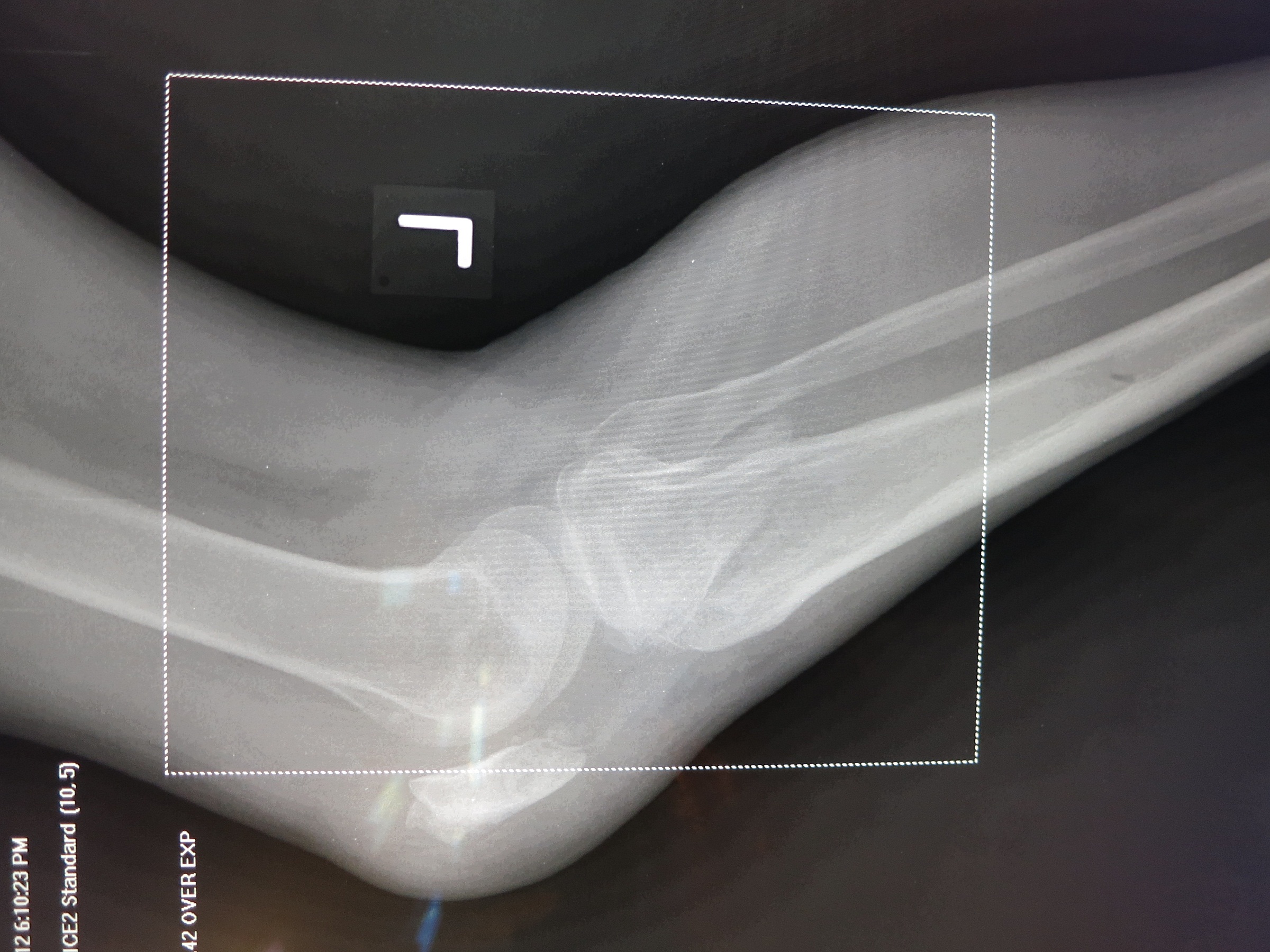
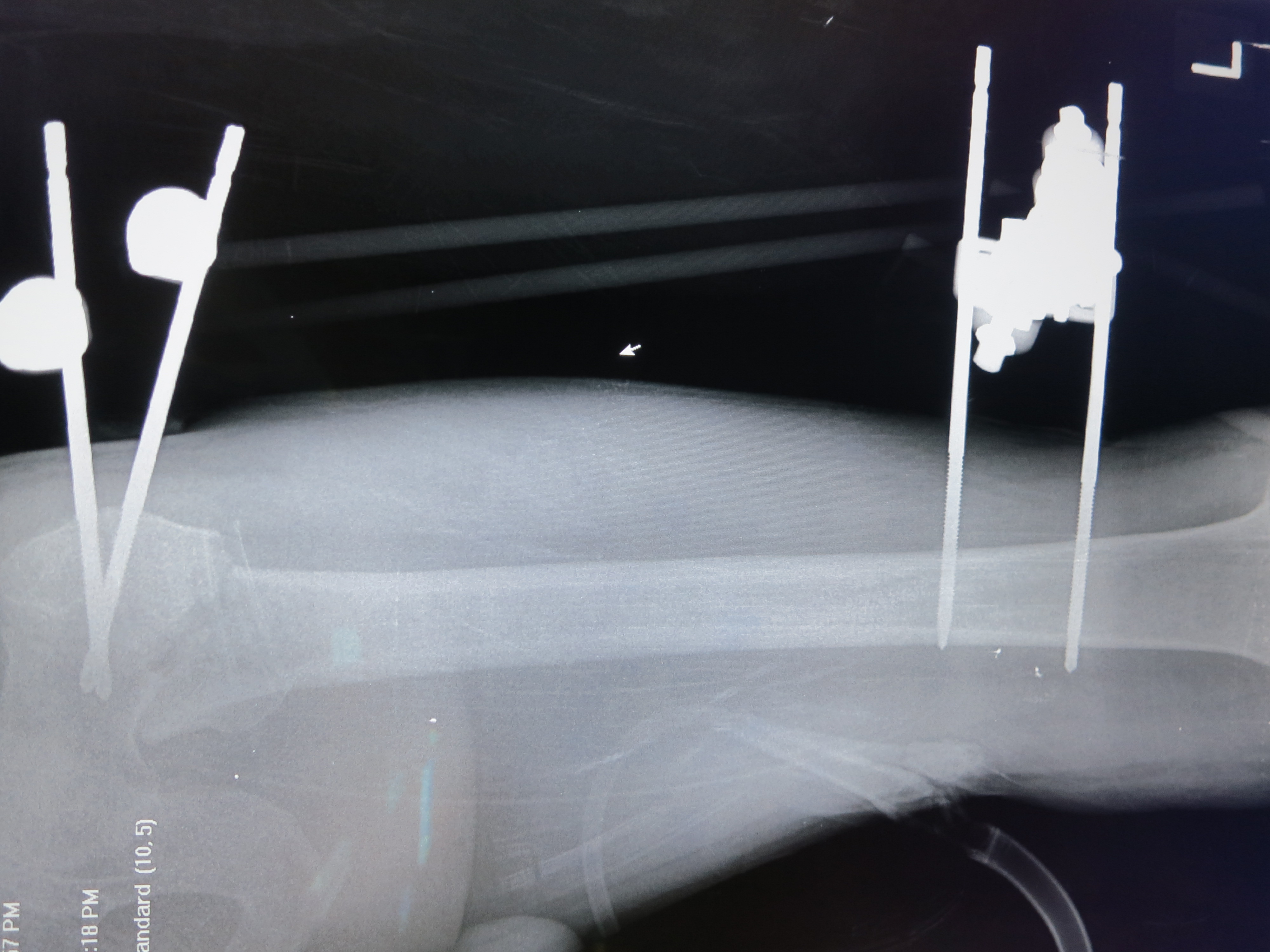
Ara K. suffered massive damage to both legs. Surgeons performed a below-knee amputation on her right leg, but her left leg was more severely damaged. With skin and soft tissue loss, a below-knee amputation was not feasible for her left leg. Posteriorly, large areas would have had near-exposed bone because there was not enough tissue for coverage.

During hurried discussion, one of her surgeons stated, “If we shunted the left leg, it would have been to a high below-knee amputation [due to the soft tissue damage around the knee] and I don’t know how helpful that would be.”

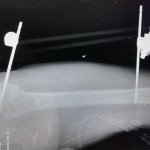
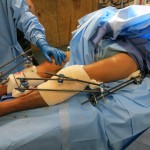
Surgeons ultimately decided to perform an above-knee amputation. Ara K.’s injuries were so proximal, surgeons obtained control of her femoral artery just proximal to the bifurcation and passed vessels loops around it in case she started to hemorrhage massively from her wounds.  Care was taken to keep the tourniquet in place and prep it into the surgical field so that controlled release during surgery could be performed.

Ara K. had damaged and thrombosed vasculature just distal to the level where surgeons made the bony amputation cut. The surgeons had to take more muscle medially in order to debride her injury appropriately. They decided to retain as much viable muscle as possible together with her flap, but in the end had to shorten the femoral cut even more because of concerns that the flap was too thin over the end of the femur.  They felt that leaving only viable skin over the distal stump would lead to more complications with eventual prosthesis fitting.

In the operating room, Ara K. was given 1:1 transfusions of fresh frozen plasma and packed red blood cells, and surgeons did not have to use proximal control to stop the bleeding.

Ara K. was maintained for a week at the forward base hospital for stabilization of both her lower extremity injuries and other issues related to the blast.  She was ultimately transferred in stable condition to the local hospital for completion of care.

In above knee amputations, what is the utility of myodesis with consideration of future mechanical function and prosthesis fitting?

In rural Afghanistan, like most austere environments, prosthesis fitting is quite difficult.  There is a national program that is provided, but the waiting list can be quite long.  If NO prosthesis services are available, would that change surgeons’ preferences for amputation level decision making?  In this case would you have given the “high below-knee amputation” a chance before converting to an above-knee amputation?

Posted in Case of the Month, News | Leave a comment

Orthopaedics in Motion – Volume 2, Number 1 – Spring 2012 is now available online.

Orthopaedics in Motion – Volume 2, Number 1 – Spring 2012 is now available online.

Orthopaedics in Motion is a quarterly newsletter containing sections on disaster preparedness and trauma care. The newsletter also includes overviews of the latest aspects of clinic care, continuing education, research and innovation pertinent to the practicing orthopaedic surgeon.

For Orthopaedics in Motion – Volume 1, Number 4 – Winter 2011 please visit The Disaster Preparedness Toolbox and click the Newsletter link.

For Orthopaedics in Motion – Volume 1, Number 3 – Fall 2011 please visit The Disaster Preparedness Toolbox and click the Newsletter link.

For Orthopaedics in Motion – Volume 1, Number 2 – Summer 2011 please visit The Disaster Preparedness Toolbox and click the Newsletter link.

For Orthopaedics in Motion – Volume 1, Number 1 – Spring 2011 please visit The Disaster Preparedness Toolbox and click the Newsletter link.

Posted in News | Leave a comment

Case of the Month – Hip Injury – Part 2 Now Live

The surgeon immediately recognized that Spc Walsh had a closed left hip fracture dislocation and without delay attempted a manual closed reduction. Unfortunately, this was not successful, even with the patient under anesthesia. The surgeon then attempted another closed reduction, this time with a Steinmann pin placed in the proximal femur. The fracture, however, was found to be irreducible.

The surgeon decided to perform an open reduction with internal fixation of the Pipkin 2 femoral head fracture.

figure 5

The patient was then transported by aeromedical evacuation back to his home country where he reportedly went on to complete his healing and recovery without significant complication.

Posted in Case of the Month, News | 2 Comments

Case of the Month – Hip Injury – Part 1 Now Live

While returning to camp, a small convoy of coalition soldiers traveling in a mine resistant vehicle triggered an improvised explosive device (IED). The vehicle rolled over in the blast, injuring the passengers.

Spc Walsh, a 32-year-old soldier, was treated by a field medic who reported, “The patient was in extreme pain but remained hemodynamically stable.” The medic immobilized Spc Walsh, including his leg, which was in a flexed position, locked in internal rotation. Walsh was then transported, within an hour including flight time, by a medevac helicopter to the nearest level 2 combat hospital.

What would be your initial diagnosis and treatment?

Posted in Case of the Month, News | 4 Comments

Orthopaedics in Motion – Winter 2012 is now available online

Orthopaedics in Motion – Volume 1, Number 4 – Winter 2012 is now available online.

Orthopaedics in Motion is a quarterly newsletter containing sections on disaster preparedness and trauma care. The newsletter also includes overviews of the latest aspects of clinic care, continuing education, research and innovation pertinent to the practicing orthopaedic surgeon.

For Orthopaedics in Motion – Volume 1, Number 3 – Fall 2011 please visit The Disaster Preparedness Toolbox and click the Newsletter link.

For Orthopaedics in Motion – Volume 1, Number 2 – Summer 2011 please visit The Disaster Preparedness Toolbox and click the Newsletter link.

For Orthopaedics in Motion – Volume 1, Number 1 – Spring 2011 please visit The Disaster Preparedness Toolbox and click the Newsletter link.

Posted in News | Leave a comment

Displaced Femoral Neck Fracture – Part 2 Now Live

After creating a hand made blade plate, the surgeons treated Haamid T. with open reduction and internal fixation. They used a 3.5 mm limited contact dynamic compression plate (LC-DCP) that was sized and bent to fit.

Due to the possibility that Haamid T. might not return to the hospital for hardware removal, the surgeons stopped short of the physis. They also used tension band augmentation of the trochanteric apophysis.

Posted in Case of the Month, News | Leave a comment

Travel Alert

The Department of State has issued this Worldwide Caution Travel Alert to update information on the continuing threat of terrorist actions and violence against U.S. citizens and interests throughout the world.

Posted in News | Leave a comment

Displaced Femoral Neck Fracture – Part 1 Now Live

Haamid T., a ten-year-old boy, was on his rooftop collecting bullet casings when he tripped and fell eight feet to the ground. The next day he was brought by his uncle to the local national hospital with a swollen, painful right hip and was unable to walk.

After a two-week treatment of bed rest prescribed by the local national doctor, Haamid T. showed no signs of improvement and was brought by his family to the local level II combat support hospital.

Figure 1

At the military hospital, Haamid T. was diagnosed with a displaced femoral neck fracture. It was also noted that the boy was small in stature for his age. All of the fixation implants at the hospital were “adult-sized.”

What would be your treatment plan at this point for Haamid T.?

Posted in Case of the Month | Leave a comment

Winter Weather Disaster Preparedness Quiz

Winter Weather Disaster Preparedness Quiz

How prepared are you for the winter? Do you know how to react during a winter storm? Find out if you are prepared with this winter weather disaster preparedness quiz!
Start

Congratulations - you have completed Winter Weather Disaster Preparedness Quiz.

You scored %%SCORE%% out of %%TOTAL%%.

%%RATING%%

To read more about disaster preparedness check out the FEMA website
Your answers are highlighted below.
Return
Shaded items are complete.
12345
End
Return
Posted in Quiz | Leave a comment

Orthopaedics in Motion – Volume 3 – Fall 2011 is now available online

Orthopaedics in Motion – Volume 3 – Fall 2011 is now available online.

Orthopaedics in Motion is a quarterly newsletter containing sections on disaster preparedness and trauma care. The newsletter also includes overviews of the latest aspects of clinic care, continuing education, research and innovation pertinent to the practicing orthopaedic surgeon.

For Orthopaedics in Motion – Volume 2 – Summer 2011 please visit The Disaster Preparedness Toolbox and click the Newsletter link.

For Orthopaedics in Motion – Volume 1 – Spring 2011 please visit The Disaster Preparedness Toolbox and click the Newsletter link.

Posted in News | Leave a comment